Buy aboutcars.eu ?
We are moving the project
aboutcars.eu .
Are you interested in purchasing the domain
aboutcars.eu ?
domain@kv-gmbh.de · 0541-91531010
Buy aboutcars.eu ?
How can one convert acceleration to Earth acceleration?
To convert acceleration to Earth acceleration, one can use the formula: Earth acceleration = acceleration / 9.81 m/s^2. This formula is derived from the fact that Earth's gravitational acceleration is approximately 9.81 m/s^2. By dividing the given acceleration value by 9.81 m/s^2, one can determine how many times greater or smaller the acceleration is compared to Earth's gravitational acceleration. This conversion is useful for comparing accelerations in different contexts to the standard acceleration due to gravity on Earth. **
How can one convert acceleration to Earth's acceleration?
To convert acceleration to Earth's acceleration, one can simply divide the given acceleration by the acceleration due to gravity on Earth, which is approximately 9.81 m/s^2. This will give the acceleration in terms of how many times Earth's gravity it is. For example, if a car is accelerating at 5 m/s^2, dividing this by 9.81 m/s^2 will give approximately 0.51 g, where g represents Earth's acceleration due to gravity. **


Similar search terms for Acceleration
Top-Angebote
Products related to Acceleration:
-
HARPERCOLLINS Creative Confidence by Tom & David Kelley – Unleashing Your Creative Potential & Innovation MindsetA powerful and inspiring book from the founders of IDEO, the award-winning design firm, on unleashing the creativity that lies within each and every one of us. Too often, companies and individuals assume that creativity and innovation are the domain of the ‘creative types’. But two of the foremost experts in innovation, design and creativity on the planet show us that each and every one of us is creative. In an entertaining and inspiring narrative that draws on countless stories from their work at IDEO, and with many of the world's top companies and design firms, David and Tom Kelley identify the principles and strategies that will allow us to tap into our creative potential in our work lives, and in our personal lives, allow us to think outside the box in terms of how we approach and solve problems. ‘Creative Confidence’ is a book that will help each of us be more productive and successful in our lives and in our careers.4,95 £*Shipping: 1,99 £Secure redirect to the provider
-
Uplift Essentials N50 High Efficiency Cat Litter Deodorizer Blocks N50 High Efficiency Cat Litter Deodorizer BlocksTake control of your homes air quality with the N50 cat litter deodorizer blocks. These professionalgrade odor eliminators are engineered to neutralize stubborn ammonia and waste smells at the source, rather than just masking them with heavy...142,97 $*Shipping: 0,00 $Secure redirect to the provider
-
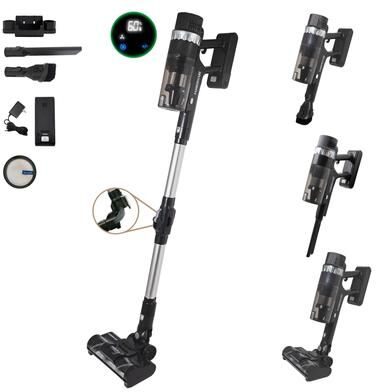
Farberware Cordless Platinum Stick Vacuum Cleaner, Smart Sensor Technology for Carpet and Hard Floors, Bendable DesignFarberware Cordless Platinum Stick Vacuum Cleaner, Smart Sensor Technology for Carpet and Hard Floors, Bendable Design, Converts to Handheld Vacuum Description: Life is messy, but with Farberware’s Cordless Platinum Stick Vacuum, you can tackle every…147,49 $*Shipping: 0,00 $Secure redirect to the provider
-
Uplifted Finds Side Sleeper Ear Protection Pillow For Ear Piercing Comfort And Pressure Relief technology WhiteEnjoy restful nights with this side sleeper ear protection pillow designed to reduce pressure on sensitive ears. Perfect for those with new piercings, ear pain, or anyone who needs extra comfort while sleeping on their side. Key Features Ergonomic...106,97 $*Shipping: 0,00 $Secure redirect to the provider



-
What is the difference between gravitational acceleration and Earth's acceleration?
Gravitational acceleration is the acceleration experienced by an object due to the force of gravity, which is approximately 9.81 m/s^2 on the surface of the Earth. Earth's acceleration, on the other hand, refers to the acceleration of the Earth itself as it orbits the Sun, which is approximately 9.81 m/s^2 towards the Sun. In essence, gravitational acceleration is the acceleration experienced by objects on Earth due to gravity, while Earth's acceleration is the acceleration of the Earth as it moves through space. **
-
What is the difference between tangential acceleration and rotational acceleration?
Tangential acceleration is the acceleration of an object moving in a circular path, and it is directed along the tangent to the path. It is caused by a change in the object's speed or direction. On the other hand, rotational acceleration is the rate of change of angular velocity of an object rotating around an axis. It is caused by a torque or force acting on the object, and it is directed perpendicular to the plane of rotation. In summary, tangential acceleration is related to linear motion in a circular path, while rotational acceleration is related to the change in the rate of rotation of an object. **
-
What is the formula for acceleration in uniform acceleration in physics?
The formula for acceleration in uniform acceleration in physics is given by a = (v - u) / t, where a is the acceleration, v is the final velocity, u is the initial velocity, and t is the time taken. This formula represents the change in velocity over time, and it is used to calculate the rate at which an object's velocity is changing. Acceleration is measured in meters per second squared (m/s^2). **
-
Is acceleration always constant?
No, acceleration is not always constant. Acceleration is the rate of change of velocity, so if an object's velocity is changing at a constant rate, then its acceleration is constant. However, if an object's velocity is changing at a non-constant rate, then its acceleration will also be non-constant. For example, when an object is thrown upwards, its acceleration due to gravity is constant, but when a car is speeding up or slowing down, its acceleration is not constant. **


Why is there acceleration?
Acceleration occurs when there is a change in an object's velocity, either in magnitude or direction. This change can be caused by a force acting on the object, such as gravity, friction, or a push or pull from another object. According to Newton's second law of motion, the acceleration of an object is directly proportional to the net force acting on it and inversely proportional to its mass. Therefore, if there is a net force acting on an object, it will experience acceleration in the direction of the force. **
What is negative acceleration?
Negative acceleration, also known as deceleration or retardation, occurs when an object's velocity decreases over time. This means that the object is slowing down. Negative acceleration can be caused by forces such as friction, air resistance, or opposing forces acting on the object. It is represented by a negative value in equations of motion and is the opposite of positive acceleration, which causes an object to speed up. **
Top-Angebote
Products related to Acceleration:
-
HARPERCOLLINS Creative Confidence by Tom & David Kelley – Unleashing Your Creative Potential & Innovation MindsetA powerful and inspiring book from the founders of IDEO, the award-winning design firm, on unleashing the creativity that lies within each and every one of us. Too often, companies and individuals assume that creativity and innovation are the domain of the ‘creative types’. But two of the foremost experts in innovation, design and creativity on the planet show us that each and every one of us is creative. In an entertaining and inspiring narrative that draws on countless stories from their work at IDEO, and with many of the world's top companies and design firms, David and Tom Kelley identify the principles and strategies that will allow us to tap into our creative potential in our work lives, and in our personal lives, allow us to think outside the box in terms of how we approach and solve problems. ‘Creative Confidence’ is a book that will help each of us be more productive and successful in our lives and in our careers.4,95 £*Shipping: 1,99 £Secure redirect to the provider
-
Uplift Essentials N50 High Efficiency Cat Litter Deodorizer Blocks N50 High Efficiency Cat Litter Deodorizer BlocksTake control of your homes air quality with the N50 cat litter deodorizer blocks. These professionalgrade odor eliminators are engineered to neutralize stubborn ammonia and waste smells at the source, rather than just masking them with heavy...142,97 $*Shipping: 0,00 $Secure redirect to the provider
-
How can one convert acceleration to Earth acceleration?
To convert acceleration to Earth acceleration, one can use the formula: Earth acceleration = acceleration / 9.81 m/s^2. This formula is derived from the fact that Earth's gravitational acceleration is approximately 9.81 m/s^2. By dividing the given acceleration value by 9.81 m/s^2, one can determine how many times greater or smaller the acceleration is compared to Earth's gravitational acceleration. This conversion is useful for comparing accelerations in different contexts to the standard acceleration due to gravity on Earth. **
-
How can one convert acceleration to Earth's acceleration?
To convert acceleration to Earth's acceleration, one can simply divide the given acceleration by the acceleration due to gravity on Earth, which is approximately 9.81 m/s^2. This will give the acceleration in terms of how many times Earth's gravity it is. For example, if a car is accelerating at 5 m/s^2, dividing this by 9.81 m/s^2 will give approximately 0.51 g, where g represents Earth's acceleration due to gravity. **
-
What is the difference between gravitational acceleration and Earth's acceleration?
Gravitational acceleration is the acceleration experienced by an object due to the force of gravity, which is approximately 9.81 m/s^2 on the surface of the Earth. Earth's acceleration, on the other hand, refers to the acceleration of the Earth itself as it orbits the Sun, which is approximately 9.81 m/s^2 towards the Sun. In essence, gravitational acceleration is the acceleration experienced by objects on Earth due to gravity, while Earth's acceleration is the acceleration of the Earth as it moves through space. **
-
What is the difference between tangential acceleration and rotational acceleration?
Tangential acceleration is the acceleration of an object moving in a circular path, and it is directed along the tangent to the path. It is caused by a change in the object's speed or direction. On the other hand, rotational acceleration is the rate of change of angular velocity of an object rotating around an axis. It is caused by a torque or force acting on the object, and it is directed perpendicular to the plane of rotation. In summary, tangential acceleration is related to linear motion in a circular path, while rotational acceleration is related to the change in the rate of rotation of an object. **
Similar search terms for Acceleration
-
Farberware Cordless Platinum Stick Vacuum Cleaner, Smart Sensor Technology for Carpet and Hard Floors, Bendable DesignFarberware Cordless Platinum Stick Vacuum Cleaner, Smart Sensor Technology for Carpet and Hard Floors, Bendable Design, Converts to Handheld Vacuum Description: Life is messy, but with Farberware’s Cordless Platinum Stick Vacuum, you can tackle every…147,49 $*Shipping: 0,00 $Secure redirect to the provider
-
Uplifted Finds Side Sleeper Ear Protection Pillow For Ear Piercing Comfort And Pressure Relief technology WhiteEnjoy restful nights with this side sleeper ear protection pillow designed to reduce pressure on sensitive ears. Perfect for those with new piercings, ear pain, or anyone who needs extra comfort while sleeping on their side. Key Features Ergonomic...106,97 $*Shipping: 0,00 $Secure redirect to the provider
-
HP 280 Silent Wireless Mouse - Blue Optical Technology, 1600 DPI, Ergonomic Design, USB-A Dongle, Black, NewHP 280 Silent Wireless Mouse - Blue Optical Technology, 1600 DPI, Ergonomic Design, USB-A Dongle, Black Overview The HP 280 Silent Wireless Mouse is designed for a quiet and efficient computing experience, making it ideal for both work and home use. Featuring advanced Blue Optical Technology, it delivers precise tracking on various surfaces with a 1600 DPI sensor for smooth and responsive performance. The ergonomic design ensures comfort during extended use, while the wireless connectivity via a USB-A dongle provides reliable and hassle-free operation. With a silent click mechanism, this mouse reduces noise without compromising functionality, offering a seamless and distraction-free experience. Key Features: Silent click technology for a quieter and more comfortable experience Blue Optical Technology for smooth tracking on different surfaces 1600 DPI sensor for accurate and responsive movement Ergonomic design to support comfortable usage for long hours Reliable wireless connectivity via USB-A dongle Compact and lightweight for easy portability Long battery life for extended usage without frequent replacements Product Description The HP 280 Silent Wireless Mouse offers a superior combination of performance, comfort, and convenience. Equipped with Blue Optical Technology, it provides precise tracking on a variety of surfaces, making it suitable for home, office, and travel use. The 1600 DPI sensor ensures smooth and accurate cursor movement, enhancing productivity and efficiency. Designed with an ergonomic shape, this mouse supports natural hand positioning, reducing strain during prolonged use. The silent click feature minimizes noise, making it perfect for quiet environments such as shared workspaces, libraries, and late-night browsing. Wireless connectivity through the USB-A dongle ensures a stable and interference-free connection, eliminating the hassle of tangled wires. With a sleek black finish and a lightweight build, the HP 280 Silent Wireless Mouse is both stylish and portable. Its energy-efficient design offers long battery life, allowing uninterrupted usage without frequent battery changes. Whether for everyday tasks, professional work, or casual browsing, this mouse delivers a comfortable and silent experience. Silent click technology for noise-free operation Blue Optical Technology for enhanced tracking accuracy 1600 DPI sensor for smooth and responsive movement Ergonomic design for all-day comfort Wireless connectivity with a USB-A dongle for reliable performance Compact, lightweight, and easy to carry Long battery life for extended use Stylish black finish, perfect for home, office, or travel The HP 280 Silent Wireless Mouse is the perfect choice for users looking for a silent, precise, and ergonomic mouse that delivers high performance with minimal noise.14,99 £*Shipping: 0,00 £Secure redirect to the provider
-
What is the formula for acceleration in uniform acceleration in physics?
The formula for acceleration in uniform acceleration in physics is given by a = (v - u) / t, where a is the acceleration, v is the final velocity, u is the initial velocity, and t is the time taken. This formula represents the change in velocity over time, and it is used to calculate the rate at which an object's velocity is changing. Acceleration is measured in meters per second squared (m/s^2). **
-
Is acceleration always constant?
No, acceleration is not always constant. Acceleration is the rate of change of velocity, so if an object's velocity is changing at a constant rate, then its acceleration is constant. However, if an object's velocity is changing at a non-constant rate, then its acceleration will also be non-constant. For example, when an object is thrown upwards, its acceleration due to gravity is constant, but when a car is speeding up or slowing down, its acceleration is not constant. **
-
Why is there acceleration?
Acceleration occurs when there is a change in an object's velocity, either in magnitude or direction. This change can be caused by a force acting on the object, such as gravity, friction, or a push or pull from another object. According to Newton's second law of motion, the acceleration of an object is directly proportional to the net force acting on it and inversely proportional to its mass. Therefore, if there is a net force acting on an object, it will experience acceleration in the direction of the force. **
-
What is negative acceleration?
Negative acceleration, also known as deceleration or retardation, occurs when an object's velocity decreases over time. This means that the object is slowing down. Negative acceleration can be caused by forces such as friction, air resistance, or opposing forces acting on the object. It is represented by a negative value in equations of motion and is the opposite of positive acceleration, which causes an object to speed up. **
* All prices are inclusive of VAT and, if applicable, plus shipping costs. The offer information is based on the details provided by the respective shop and is updated through automated processes. Real-time updates do not occur, so deviations can occur in individual cases. ** Note: Parts of this content were created by AI.