Buy aboutcars.eu ?
We are moving the project
aboutcars.eu .
Are you interested in purchasing the domain
aboutcars.eu ?
domain@kv-gmbh.de · 0541-91531010
Buy aboutcars.eu ?
Into which seven groups can invertebrates be divided?
Invertebrates can be divided into seven groups: Porifera (sponges), Cnidaria (jellyfish, corals), Platyhelminthes (flatworms), Nematoda (roundworms), Annelida (segmented worms), Mollusca (snails, clams, octopuses), and Arthropoda (insects, spiders, crustaceans). Each group has its own unique characteristics and includes a wide variety of species with diverse adaptations for survival. **
How are the nerve cells structured in invertebrates?
In invertebrates, nerve cells are organized into a network called a nerve net. This nerve net consists of interconnected neurons that are spread throughout the body. These neurons are typically simpler in structure compared to the more specialized nerve cells found in vertebrates. The nerve net allows for rapid communication and coordination of responses to stimuli in invertebrates. **


Similar search terms for Invertebrates
Top-Angebote
Products related to Invertebrates:
-
HARPERCOLLINS Creative Confidence by Tom & David Kelley – Unleashing Your Creative Potential & Innovation MindsetA powerful and inspiring book from the founders of IDEO, the award-winning design firm, on unleashing the creativity that lies within each and every one of us. Too often, companies and individuals assume that creativity and innovation are the domain of the ‘creative types’. But two of the foremost experts in innovation, design and creativity on the planet show us that each and every one of us is creative. In an entertaining and inspiring narrative that draws on countless stories from their work at IDEO, and with many of the world's top companies and design firms, David and Tom Kelley identify the principles and strategies that will allow us to tap into our creative potential in our work lives, and in our personal lives, allow us to think outside the box in terms of how we approach and solve problems. ‘Creative Confidence’ is a book that will help each of us be more productive and successful in our lives and in our careers.4,95 £*Shipping: 1,99 £Secure redirect to the provider
-
Uplift Essentials N50 High Efficiency Cat Litter Deodorizer Blocks N50 High Efficiency Cat Litter Deodorizer BlocksTake control of your homes air quality with the N50 cat litter deodorizer blocks. These professionalgrade odor eliminators are engineered to neutralize stubborn ammonia and waste smells at the source, rather than just masking them with heavy...142,97 $*Shipping: 0,00 $Secure redirect to the provider
-
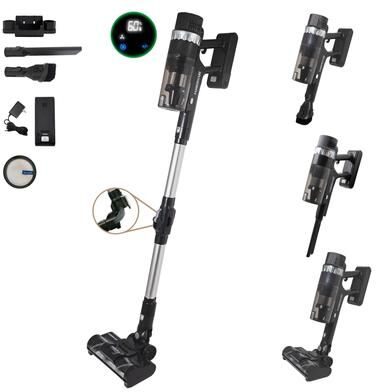
Farberware Cordless Platinum Stick Vacuum Cleaner, Smart Sensor Technology for Carpet and Hard Floors, Bendable DesignFarberware Cordless Platinum Stick Vacuum Cleaner, Smart Sensor Technology for Carpet and Hard Floors, Bendable Design, Converts to Handheld Vacuum Description: Life is messy, but with Farberware’s Cordless Platinum Stick Vacuum, you can tackle every…155,99 $*Shipping: 0,00 $Secure redirect to the provider



-
What is the difference between vertebrates and invertebrates?
The main difference between vertebrates and invertebrates is the presence of a backbone. Vertebrates have a backbone made of vertebrae that protects the spinal cord, while invertebrates do not have a backbone. Vertebrates include animals such as mammals, birds, reptiles, amphibians, and fish, while invertebrates include animals such as insects, spiders, worms, and mollusks. Additionally, vertebrates tend to have more complex body systems and are generally larger in size compared to invertebrates. **
-
What are the characteristics of vertebrates, invertebrates, and insects?
Vertebrates are animals with a backbone or spinal column, including mammals, birds, reptiles, amphibians, and fish. They typically have a well-developed internal skeleton and a complex nervous system. Invertebrates, on the other hand, are animals without a backbone, such as insects, arachnids, mollusks, and crustaceans. They often have exoskeletons for support and protection. Insects are a specific type of invertebrate characterized by having six legs, three body segments (head, thorax, and abdomen), and often wings. They are the most diverse group of animals on Earth, with over a million described species. **
-
Why are there mainly electrical synapses in fish and invertebrates?
Electrical synapses are more common in fish and invertebrates because they allow for faster and more direct communication between neurons. This is important in these organisms for rapid responses to environmental stimuli and for coordinating movements. Additionally, electrical synapses are more energy-efficient compared to chemical synapses, which is advantageous for organisms with simpler nervous systems. Overall, the prevalence of electrical synapses in fish and invertebrates reflects their need for efficient and rapid neural communication in their environments. **
-
How does the conduction of excitation work in vertebrates and invertebrates?
In vertebrates, excitation is conducted through the nervous system, which consists of neurons that transmit electrical signals. When a stimulus is detected, such as touch or sound, sensory neurons transmit the signal to the central nervous system, where it is processed and a response is generated. This response is then transmitted through motor neurons to the appropriate muscles or glands. In invertebrates, excitation is also conducted through the nervous system, but their nervous system is less centralized than in vertebrates. Invertebrates have a network of neurons that transmit signals throughout the body, allowing for rapid responses to stimuli. Some invertebrates, such as insects, also have specialized sensory organs that detect specific stimuli and transmit signals to the nervous system for processing and response. **


What is the difference between the axons of vertebrates and invertebrates?
The main difference between the axons of vertebrates and invertebrates lies in their myelination. In vertebrates, axons are often myelinated, which means they are surrounded by a fatty substance that speeds up the transmission of electrical signals. In contrast, invertebrate axons are typically unmyelinated, which can result in slower signal transmission. Additionally, vertebrate axons tend to be larger in diameter compared to invertebrate axons, allowing for faster conduction of nerve impulses. **
What ideas are there for a presentation on invertebrates in the subject of Biology?
A presentation on invertebrates in Biology could cover various topics such as the classification of invertebrates, their diversity and adaptations, their ecological roles in different ecosystems, and their importance in various fields like medicine and agriculture. The presentation could also focus on specific groups of invertebrates such as insects, mollusks, or arachnids, highlighting their unique characteristics and life cycles. Additionally, discussing current research on invertebrates, their conservation status, and the threats they face due to human activities could also be included in the presentation. **
Top-Angebote
Products related to Invertebrates:
-
HARPERCOLLINS Creative Confidence by Tom & David Kelley – Unleashing Your Creative Potential & Innovation MindsetA powerful and inspiring book from the founders of IDEO, the award-winning design firm, on unleashing the creativity that lies within each and every one of us. Too often, companies and individuals assume that creativity and innovation are the domain of the ‘creative types’. But two of the foremost experts in innovation, design and creativity on the planet show us that each and every one of us is creative. In an entertaining and inspiring narrative that draws on countless stories from their work at IDEO, and with many of the world's top companies and design firms, David and Tom Kelley identify the principles and strategies that will allow us to tap into our creative potential in our work lives, and in our personal lives, allow us to think outside the box in terms of how we approach and solve problems. ‘Creative Confidence’ is a book that will help each of us be more productive and successful in our lives and in our careers.4,95 £*Shipping: 1,99 £Secure redirect to the provider
-
Uplift Essentials N50 High Efficiency Cat Litter Deodorizer Blocks N50 High Efficiency Cat Litter Deodorizer BlocksTake control of your homes air quality with the N50 cat litter deodorizer blocks. These professionalgrade odor eliminators are engineered to neutralize stubborn ammonia and waste smells at the source, rather than just masking them with heavy...142,97 $*Shipping: 0,00 $Secure redirect to the provider
-
Into which seven groups can invertebrates be divided?
Invertebrates can be divided into seven groups: Porifera (sponges), Cnidaria (jellyfish, corals), Platyhelminthes (flatworms), Nematoda (roundworms), Annelida (segmented worms), Mollusca (snails, clams, octopuses), and Arthropoda (insects, spiders, crustaceans). Each group has its own unique characteristics and includes a wide variety of species with diverse adaptations for survival. **
-
How are the nerve cells structured in invertebrates?
In invertebrates, nerve cells are organized into a network called a nerve net. This nerve net consists of interconnected neurons that are spread throughout the body. These neurons are typically simpler in structure compared to the more specialized nerve cells found in vertebrates. The nerve net allows for rapid communication and coordination of responses to stimuli in invertebrates. **
-
What is the difference between vertebrates and invertebrates?
The main difference between vertebrates and invertebrates is the presence of a backbone. Vertebrates have a backbone made of vertebrae that protects the spinal cord, while invertebrates do not have a backbone. Vertebrates include animals such as mammals, birds, reptiles, amphibians, and fish, while invertebrates include animals such as insects, spiders, worms, and mollusks. Additionally, vertebrates tend to have more complex body systems and are generally larger in size compared to invertebrates. **
-
What are the characteristics of vertebrates, invertebrates, and insects?
Vertebrates are animals with a backbone or spinal column, including mammals, birds, reptiles, amphibians, and fish. They typically have a well-developed internal skeleton and a complex nervous system. Invertebrates, on the other hand, are animals without a backbone, such as insects, arachnids, mollusks, and crustaceans. They often have exoskeletons for support and protection. Insects are a specific type of invertebrate characterized by having six legs, three body segments (head, thorax, and abdomen), and often wings. They are the most diverse group of animals on Earth, with over a million described species. **
Similar search terms for Invertebrates
-
Farberware Cordless Platinum Stick Vacuum Cleaner, Smart Sensor Technology for Carpet and Hard Floors, Bendable DesignFarberware Cordless Platinum Stick Vacuum Cleaner, Smart Sensor Technology for Carpet and Hard Floors, Bendable Design, Converts to Handheld Vacuum Description: Life is messy, but with Farberware’s Cordless Platinum Stick Vacuum, you can tackle every…155,99 $*Shipping: 0,00 $Secure redirect to the provider
-
Uplifted Finds Side Sleeper Ear Protection Pillow For Ear Piercing Comfort And Pressure Relief technology WhiteEnjoy restful nights with this side sleeper ear protection pillow designed to reduce pressure on sensitive ears. Perfect for those with new piercings, ear pain, or anyone who needs extra comfort while sleeping on their side. Key Features Ergonomic...106,97 $*Shipping: 0,00 $Secure redirect to the provider
-
Uplifted Finds Luxury Wooden Recipe Display Stand And High Performance Tablet Support Architecture Luxury Wooden Recipe Display Stand And High Performance Tablet Support ArchitectureCommand ultimate culinary confidence with this Wooden Display Stand, a highperformance organization solution specifically engineered to act as a comprehensive tool for elite organization and superior technical ergonomics. Built with a robust...84,97 $*Shipping: 0,00 $Secure redirect to the provider
-
Why are there mainly electrical synapses in fish and invertebrates?
Electrical synapses are more common in fish and invertebrates because they allow for faster and more direct communication between neurons. This is important in these organisms for rapid responses to environmental stimuli and for coordinating movements. Additionally, electrical synapses are more energy-efficient compared to chemical synapses, which is advantageous for organisms with simpler nervous systems. Overall, the prevalence of electrical synapses in fish and invertebrates reflects their need for efficient and rapid neural communication in their environments. **
-
How does the conduction of excitation work in vertebrates and invertebrates?
In vertebrates, excitation is conducted through the nervous system, which consists of neurons that transmit electrical signals. When a stimulus is detected, such as touch or sound, sensory neurons transmit the signal to the central nervous system, where it is processed and a response is generated. This response is then transmitted through motor neurons to the appropriate muscles or glands. In invertebrates, excitation is also conducted through the nervous system, but their nervous system is less centralized than in vertebrates. Invertebrates have a network of neurons that transmit signals throughout the body, allowing for rapid responses to stimuli. Some invertebrates, such as insects, also have specialized sensory organs that detect specific stimuli and transmit signals to the nervous system for processing and response. **
-
What is the difference between the axons of vertebrates and invertebrates?
The main difference between the axons of vertebrates and invertebrates lies in their myelination. In vertebrates, axons are often myelinated, which means they are surrounded by a fatty substance that speeds up the transmission of electrical signals. In contrast, invertebrate axons are typically unmyelinated, which can result in slower signal transmission. Additionally, vertebrate axons tend to be larger in diameter compared to invertebrate axons, allowing for faster conduction of nerve impulses. **
-
What ideas are there for a presentation on invertebrates in the subject of Biology?
A presentation on invertebrates in Biology could cover various topics such as the classification of invertebrates, their diversity and adaptations, their ecological roles in different ecosystems, and their importance in various fields like medicine and agriculture. The presentation could also focus on specific groups of invertebrates such as insects, mollusks, or arachnids, highlighting their unique characteristics and life cycles. Additionally, discussing current research on invertebrates, their conservation status, and the threats they face due to human activities could also be included in the presentation. **
* All prices are inclusive of VAT and, if applicable, plus shipping costs. The offer information is based on the details provided by the respective shop and is updated through automated processes. Real-time updates do not occur, so deviations can occur in individual cases. ** Note: Parts of this content were created by AI.