Buy aboutcars.eu ?
We are moving the project
aboutcars.eu .
Are you interested in purchasing the domain
aboutcars.eu ?
domain@kv-gmbh.de · 0541-91531010
Buy aboutcars.eu ?
Which criterion is it, the root criterion or the quotient criterion?
It is the root criterion. This criterion states that if the limit of the absolute value of the terms of a series to the power of 1/n is less than 1, then the series converges. This criterion is used to test the convergence of series with non-negative terms. **
What are the Abel's convergence criterion and the Leibniz criterion?
Abel's convergence criterion states that if a series ∑an converges and the sequence {bn} is bounded and monotonically decreasing, then the series ∑anbn also converges. This criterion is useful for determining the convergence of a series when the terms can be factored into two separate sequences. The Leibniz criterion is a test for the convergence of alternating series. It states that if the terms of an alternating series satisfy the conditions of being monotonically decreasing and approaching zero, then the series converges. This criterion is particularly useful for determining the convergence of series with alternating signs. **


Similar search terms for Criterion
Top-Angebote
Products related to Criterion:
-
HARPERCOLLINS Creative Confidence by Tom & David Kelley – Unleashing Your Creative Potential & Innovation MindsetA powerful and inspiring book from the founders of IDEO, the award-winning design firm, on unleashing the creativity that lies within each and every one of us. Too often, companies and individuals assume that creativity and innovation are the domain of the ‘creative types’. But two of the foremost experts in innovation, design and creativity on the planet show us that each and every one of us is creative. In an entertaining and inspiring narrative that draws on countless stories from their work at IDEO, and with many of the world's top companies and design firms, David and Tom Kelley identify the principles and strategies that will allow us to tap into our creative potential in our work lives, and in our personal lives, allow us to think outside the box in terms of how we approach and solve problems. ‘Creative Confidence’ is a book that will help each of us be more productive and successful in our lives and in our careers.4,95 £*Shipping: 1,99 £Secure redirect to the provider
-
Uplift Essentials N50 High Efficiency Cat Litter Deodorizer Blocks N50 High Efficiency Cat Litter Deodorizer BlocksTake control of your homes air quality with the N50 cat litter deodorizer blocks. These professionalgrade odor eliminators are engineered to neutralize stubborn ammonia and waste smells at the source, rather than just masking them with heavy...142,97 $*Shipping: 0,00 $Secure redirect to the provider
-
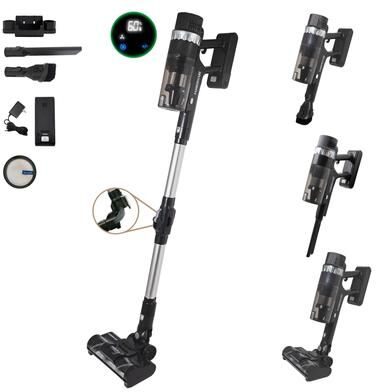
Farberware Cordless Platinum Stick Vacuum Cleaner, Smart Sensor Technology for Carpet and Hard Floors, Bendable DesignFarberware Cordless Platinum Stick Vacuum Cleaner, Smart Sensor Technology for Carpet and Hard Floors, Bendable Design, Converts to Handheld Vacuum Description: Life is messy, but with Farberware’s Cordless Platinum Stick Vacuum, you can tackle every…147,49 $*Shipping: 0,00 $Secure redirect to the provider
-
Uplifted Finds Side Sleeper Ear Protection Pillow For Ear Piercing Comfort And Pressure Relief technology WhiteEnjoy restful nights with this side sleeper ear protection pillow designed to reduce pressure on sensitive ears. Perfect for those with new piercings, ear pain, or anyone who needs extra comfort while sleeping on their side. Key Features Ergonomic...106,97 $*Shipping: 0,00 $Secure redirect to the provider



-
What is the difference between the quotient criterion and the difference criterion?
The quotient criterion and the difference criterion are both used to test for convergence or divergence of a series. The quotient criterion involves taking the limit of the ratio of consecutive terms in the series, and if the limit is less than 1, the series converges. The difference criterion involves taking the limit of the difference between consecutive terms in the series, and if the limit is 0, the series converges. In essence, the quotient criterion focuses on the ratio of consecutive terms, while the difference criterion focuses on the difference between consecutive terms. **
-
What is the Leibniz criterion?
The Leibniz criterion is a test used to determine the convergence of an alternating series. It states that if the terms of an alternating series decrease in absolute value and approach zero, then the series converges. In other words, if the terms of the series eventually become smaller and smaller, the series will converge. This criterion is named after the German mathematician and philosopher Gottfried Wilhelm Leibniz. **
-
What is the exclusion criterion?
The exclusion criterion is a predefined set of conditions or characteristics that are used to determine which individuals or subjects should be excluded from a study or analysis. These criteria are established to ensure that the study results are not influenced by certain factors that could skew the findings or introduce bias. By applying exclusion criteria, researchers can maintain the integrity and validity of their study results. **
-
What is the sterilization criterion?
The sterilization criterion refers to the standard that must be met in order to ensure that a sterilization process has been successful in eliminating all forms of microbial life, including bacteria, viruses, and fungi. This criterion typically involves achieving a certain level of microbial reduction, often measured by a logarithmic reduction factor (e.g. a 6-log reduction for sterilization). Meeting the sterilization criterion is crucial in various industries such as healthcare, pharmaceuticals, and food processing to prevent the spread of infections and ensure product safety. **


Is it a mistake to apply the majorant criterion here instead of the minorant criterion?
Yes, it would be a mistake to apply the majorant criterion instead of the minorant criterion in this case. The majorant criterion is used to show convergence, while the minorant criterion is used to show divergence. Since we are trying to show divergence in this case, the minorant criterion would be the appropriate choice. Using the majorant criterion would not provide the necessary information to prove divergence. **
What is the specific Nyquist criterion?
The Nyquist criterion is a rule used to determine the stability of a control system. It states that for a system to be stable, the contour of the Nyquist plot (a plot of the frequency response of the system) must not encircle the point (-1, j0) in the complex plane. In other words, the Nyquist criterion ensures that the system does not have any poles in the right half of the complex plane, which would lead to instability. By analyzing the Nyquist plot, engineers can determine the stability of a control system and make adjustments as needed. **
Top-Angebote
Products related to Criterion:
-
HARPERCOLLINS Creative Confidence by Tom & David Kelley – Unleashing Your Creative Potential & Innovation MindsetA powerful and inspiring book from the founders of IDEO, the award-winning design firm, on unleashing the creativity that lies within each and every one of us. Too often, companies and individuals assume that creativity and innovation are the domain of the ‘creative types’. But two of the foremost experts in innovation, design and creativity on the planet show us that each and every one of us is creative. In an entertaining and inspiring narrative that draws on countless stories from their work at IDEO, and with many of the world's top companies and design firms, David and Tom Kelley identify the principles and strategies that will allow us to tap into our creative potential in our work lives, and in our personal lives, allow us to think outside the box in terms of how we approach and solve problems. ‘Creative Confidence’ is a book that will help each of us be more productive and successful in our lives and in our careers.4,95 £*Shipping: 1,99 £Secure redirect to the provider
-
Uplift Essentials N50 High Efficiency Cat Litter Deodorizer Blocks N50 High Efficiency Cat Litter Deodorizer BlocksTake control of your homes air quality with the N50 cat litter deodorizer blocks. These professionalgrade odor eliminators are engineered to neutralize stubborn ammonia and waste smells at the source, rather than just masking them with heavy...142,97 $*Shipping: 0,00 $Secure redirect to the provider
-
Which criterion is it, the root criterion or the quotient criterion?
It is the root criterion. This criterion states that if the limit of the absolute value of the terms of a series to the power of 1/n is less than 1, then the series converges. This criterion is used to test the convergence of series with non-negative terms. **
-
What are the Abel's convergence criterion and the Leibniz criterion?
Abel's convergence criterion states that if a series ∑an converges and the sequence {bn} is bounded and monotonically decreasing, then the series ∑anbn also converges. This criterion is useful for determining the convergence of a series when the terms can be factored into two separate sequences. The Leibniz criterion is a test for the convergence of alternating series. It states that if the terms of an alternating series satisfy the conditions of being monotonically decreasing and approaching zero, then the series converges. This criterion is particularly useful for determining the convergence of series with alternating signs. **
-
What is the difference between the quotient criterion and the difference criterion?
The quotient criterion and the difference criterion are both used to test for convergence or divergence of a series. The quotient criterion involves taking the limit of the ratio of consecutive terms in the series, and if the limit is less than 1, the series converges. The difference criterion involves taking the limit of the difference between consecutive terms in the series, and if the limit is 0, the series converges. In essence, the quotient criterion focuses on the ratio of consecutive terms, while the difference criterion focuses on the difference between consecutive terms. **
-
What is the Leibniz criterion?
The Leibniz criterion is a test used to determine the convergence of an alternating series. It states that if the terms of an alternating series decrease in absolute value and approach zero, then the series converges. In other words, if the terms of the series eventually become smaller and smaller, the series will converge. This criterion is named after the German mathematician and philosopher Gottfried Wilhelm Leibniz. **
Similar search terms for Criterion
-
Farberware Cordless Platinum Stick Vacuum Cleaner, Smart Sensor Technology for Carpet and Hard Floors, Bendable DesignFarberware Cordless Platinum Stick Vacuum Cleaner, Smart Sensor Technology for Carpet and Hard Floors, Bendable Design, Converts to Handheld Vacuum Description: Life is messy, but with Farberware’s Cordless Platinum Stick Vacuum, you can tackle every…147,49 $*Shipping: 0,00 $Secure redirect to the provider
-
Uplifted Finds Side Sleeper Ear Protection Pillow For Ear Piercing Comfort And Pressure Relief technology WhiteEnjoy restful nights with this side sleeper ear protection pillow designed to reduce pressure on sensitive ears. Perfect for those with new piercings, ear pain, or anyone who needs extra comfort while sleeping on their side. Key Features Ergonomic...106,97 $*Shipping: 0,00 $Secure redirect to the provider
-
HP 280 Silent Wireless Mouse - Blue Optical Technology, 1600 DPI, Ergonomic Design, USB-A Dongle, Black, NewHP 280 Silent Wireless Mouse - Blue Optical Technology, 1600 DPI, Ergonomic Design, USB-A Dongle, Black Overview The HP 280 Silent Wireless Mouse is designed for a quiet and efficient computing experience, making it ideal for both work and home use. Featuring advanced Blue Optical Technology, it delivers precise tracking on various surfaces with a 1600 DPI sensor for smooth and responsive performance. The ergonomic design ensures comfort during extended use, while the wireless connectivity via a USB-A dongle provides reliable and hassle-free operation. With a silent click mechanism, this mouse reduces noise without compromising functionality, offering a seamless and distraction-free experience. Key Features: Silent click technology for a quieter and more comfortable experience Blue Optical Technology for smooth tracking on different surfaces 1600 DPI sensor for accurate and responsive movement Ergonomic design to support comfortable usage for long hours Reliable wireless connectivity via USB-A dongle Compact and lightweight for easy portability Long battery life for extended usage without frequent replacements Product Description The HP 280 Silent Wireless Mouse offers a superior combination of performance, comfort, and convenience. Equipped with Blue Optical Technology, it provides precise tracking on a variety of surfaces, making it suitable for home, office, and travel use. The 1600 DPI sensor ensures smooth and accurate cursor movement, enhancing productivity and efficiency. Designed with an ergonomic shape, this mouse supports natural hand positioning, reducing strain during prolonged use. The silent click feature minimizes noise, making it perfect for quiet environments such as shared workspaces, libraries, and late-night browsing. Wireless connectivity through the USB-A dongle ensures a stable and interference-free connection, eliminating the hassle of tangled wires. With a sleek black finish and a lightweight build, the HP 280 Silent Wireless Mouse is both stylish and portable. Its energy-efficient design offers long battery life, allowing uninterrupted usage without frequent battery changes. Whether for everyday tasks, professional work, or casual browsing, this mouse delivers a comfortable and silent experience. Silent click technology for noise-free operation Blue Optical Technology for enhanced tracking accuracy 1600 DPI sensor for smooth and responsive movement Ergonomic design for all-day comfort Wireless connectivity with a USB-A dongle for reliable performance Compact, lightweight, and easy to carry Long battery life for extended use Stylish black finish, perfect for home, office, or travel The HP 280 Silent Wireless Mouse is the perfect choice for users looking for a silent, precise, and ergonomic mouse that delivers high performance with minimal noise.14,99 £*Shipping: 0,00 £Secure redirect to the provider
-
What is the exclusion criterion?
The exclusion criterion is a predefined set of conditions or characteristics that are used to determine which individuals or subjects should be excluded from a study or analysis. These criteria are established to ensure that the study results are not influenced by certain factors that could skew the findings or introduce bias. By applying exclusion criteria, researchers can maintain the integrity and validity of their study results. **
-
What is the sterilization criterion?
The sterilization criterion refers to the standard that must be met in order to ensure that a sterilization process has been successful in eliminating all forms of microbial life, including bacteria, viruses, and fungi. This criterion typically involves achieving a certain level of microbial reduction, often measured by a logarithmic reduction factor (e.g. a 6-log reduction for sterilization). Meeting the sterilization criterion is crucial in various industries such as healthcare, pharmaceuticals, and food processing to prevent the spread of infections and ensure product safety. **
-
Is it a mistake to apply the majorant criterion here instead of the minorant criterion?
Yes, it would be a mistake to apply the majorant criterion instead of the minorant criterion in this case. The majorant criterion is used to show convergence, while the minorant criterion is used to show divergence. Since we are trying to show divergence in this case, the minorant criterion would be the appropriate choice. Using the majorant criterion would not provide the necessary information to prove divergence. **
-
What is the specific Nyquist criterion?
The Nyquist criterion is a rule used to determine the stability of a control system. It states that for a system to be stable, the contour of the Nyquist plot (a plot of the frequency response of the system) must not encircle the point (-1, j0) in the complex plane. In other words, the Nyquist criterion ensures that the system does not have any poles in the right half of the complex plane, which would lead to instability. By analyzing the Nyquist plot, engineers can determine the stability of a control system and make adjustments as needed. **
* All prices are inclusive of VAT and, if applicable, plus shipping costs. The offer information is based on the details provided by the respective shop and is updated through automated processes. Real-time updates do not occur, so deviations can occur in individual cases. ** Note: Parts of this content were created by AI.